Lost in the Magic of Dubrovnik’s Old Town Streets
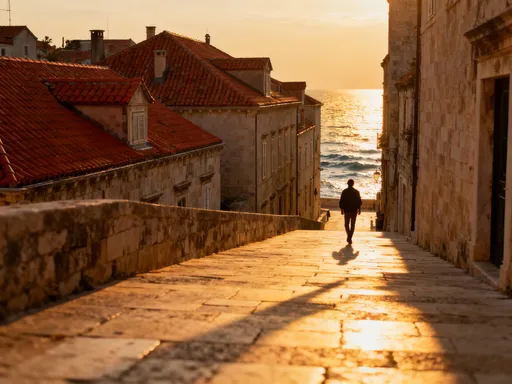
Walking through Dubrovnik’s ancient walls feels like stepping into a living postcard. Sunlight glints off limestone pavements, red-tiled roofs stretch endlessly, and sea breezes whisper through narrow alleys. This isn’t just a city—it’s an experience carved in stone. As one of the best-preserved medieval urban spaces on the Adriatic, Dubrovnik blends history, architecture, and coastal charm like nowhere else. Whether you're wandering above bustling markets or pausing at quiet overlooks, every corner tells a story. The city’s Old Town, enclosed by imposing stone fortifications, has withstood centuries of change while maintaining its soul. Today, it stands as a UNESCO World Heritage Site and a testament to thoughtful urban design, where past and present coexist in delicate balance.
The Heartbeat of a Walled City: Stepping Inside Dubrovnik’s Historic Core
Dubrovnik’s Old Town is more than a collection of ancient buildings; it is a meticulously preserved urban organism that continues to function as a living community. Enclosed by 16th-century fortifications that rise dramatically from the sea, the city within the walls spans just over one square kilometer, making it compact yet densely layered with history. At its center lies the Stradun, a broad, limestone-paved thoroughfare that runs in a straight line from Pile Gate in the west to Ploče Gate in the east. This central spine serves as the city’s primary artery, connecting major squares, churches, and civic buildings while guiding both residents and visitors through the heart of Dubrovnik.
The layout of the Old Town reflects a highly organized medieval urban plan, originally rebuilt after a devastating earthquake in 1462. City planners at the time adopted a grid-like structure—rare for its era—which enhanced ventilation, improved sanitation, and allowed for efficient movement. Unlike many historic cities that evolved haphazardly, Dubrovnik was deliberately designed with foresight, incorporating drainage systems, public fountains, and designated market spaces. This functional logic has endured for over five centuries, proving that thoughtful design can withstand the test of time. Even today, the absence of vehicles enhances the pedestrian experience, allowing the rhythms of daily life to unfold without interruption.
What makes the Old Town truly remarkable is how seamlessly historical preservation and modern life coexist. Families still reside in centuries-old stone homes, shops operate from ground-floor arcades, and children play in quiet courtyards tucked behind heavy wooden doors. The city is not a museum frozen in time but a vibrant, evolving community that honors its heritage. Walking its streets, one senses the continuity of life—where a merchant might once have traded spices from the East, a local artisan now sells handmade lace or olive oil. This living quality gives Dubrovnik a depth that few historic cities can match, inviting visitors not just to observe, but to participate in its enduring narrative.
Where Stone Meets Sea: How Geography Shapes the Urban Fabric
Dubrovnik’s dramatic setting—perched on a rocky promontory jutting into the Adriatic Sea—has profoundly influenced its development. The city’s geography dictated both its defensive strength and its architectural character. With limited flat land available, Dubrovnik grew vertically and inward, resulting in tightly packed buildings with narrow alleyways and multi-level terraces that cascade toward the water. The steep cliffs that guard its southern edge provided natural protection, allowing the city to focus its fortifications along the more accessible northern side, where the massive walls now stand as a UNESCO-recognized masterpiece of military engineering.
From the 13th century onward, Dubrovnik—then known as the Republic of Ragusa—emerged as a major maritime power, rivaling Venice in trade and diplomacy. Its survival depended on a delicate balance: strong defenses to ward off invaders, and open access to the sea for commerce. This dual need shaped the city’s urban form. Warehouses, known as fondacas, were built along the harbor, their thick stone walls designed to store goods like salt, silk, and grain. Meanwhile, the city’s elite constructed palatial homes along the Stradun, blending Renaissance elegance with practical resilience. The result is a skyline defined by uniform red-tiled roofs, a visual harmony enforced by law to preserve the city’s aesthetic integrity.
The relationship between land and sea remains central to Dubrovnik’s identity. Even today, the sound of waves lapping against the city walls can be heard from many vantage points, especially along the eastern ramparts near Fort Bokar. The sea is not just a backdrop but an active presence—shaping the climate, influencing architecture, and sustaining local livelihoods. Fishing boats still depart from nearby ports, and seafood remains a staple of the regional diet. This deep connection to the water underscores how geography is not merely a setting but a foundational force in the city’s enduring character. Every stone, every alley, every terrace tells the story of a community that learned to thrive at the edge of the continent.
Life on Foot: The Pedestrian Rhythm of Daily Dubrovnik
In Dubrovnik’s Old Town, movement is defined by the human scale. The absence of cars creates a serene, contemplative atmosphere where the pace of life slows to match the rhythm of footsteps on limestone. Residents and visitors alike navigate the city on foot, following a network of interconnected alleys, staircases, and arcades that unfold like a carefully choreographed dance. This car-free environment is not merely a tourist convenience but a continuation of centuries-old urban traditions. Since the 15th century, Dubrovnik has restricted vehicular access within the walls, a policy that enhances both safety and the quality of public space.
Walking through the Old Town is a multisensory experience. The sound of heels tapping against polished stone echoes off high walls, blending with the distant chatter of market vendors and the occasional chime of church bells. Doorways open unexpectedly into shaded courtyards, where fig trees grow from ancient stone planters and ivy climbs weathered facades. Sunlight filters through narrow passages, casting shifting patterns that mark the passage of time. At intervals, alleyways widen into small plazas—like St. Blaise Square or the Jesuit Stairs—where locals gather to talk, children play, and street musicians perform. These moments of pause and interaction are essential to the city’s social fabric.
The pedestrian experience also encourages discovery. Unlike cities designed around vehicle traffic, Dubrovnik rewards wandering. A seemingly ordinary passage might lead to a hidden viewpoint overlooking the harbor, or a quiet bench facing the open sea. This sense of exploration is built into the city’s design—narrow streets discourage through-traffic, ensuring that most movement is purposeful or leisurely. Even daily errands become small adventures: buying bread from a corner bakery, collecting laundry from a rooftop line, or meeting a neighbor at the communal well. In this way, the city fosters mindfulness, inviting people to be present in their surroundings and attuned to the subtle beauty of everyday life.
Hidden Courtyards and Quiet Corners: Discovering Intimate Urban Oases
Beyond the well-trodden paths of the Stradun and the main squares lie Dubrovnik’s most intimate secrets—hidden courtyards, private gardens, and silent stairwells that offer refuge from the bustle. These spaces, often invisible from the street, are remnants of a domestic urban life that values privacy, tranquility, and connection to nature. Many date back to the Renaissance, when wealthy families built homes around central atriums, inspired by Roman and Italian architectural models. Today, some remain private residences, while others have been converted into boutique hotels or cultural venues, preserving their serene character.
One need only step through an arched gateway to enter a different world. Courtyards such as those within the Sponza Palace or the Rector’s Palace complex feature symmetrical layouts, marble columns, and fountains that murmur softly in the shade. In spring, jasmine and bougainvillea spill over stone balconies, filling the air with fragrance. These spaces were historically designed for family gatherings, quiet reflection, and protection from the summer heat. Their enduring appeal lies in their ability to offer stillness amidst the energy of the city. For visitors, discovering such a courtyard feels like being let in on a well-kept secret—a reminder that Dubrovnik is not just a stage for tourism but a lived-in home.
Equally enchanting are the city’s rooftop terraces, accessible via steep stone staircases that climb from narrow lanes. From these elevated perches, one gains panoramic views of terracotta roofs, the shimmering sea, and distant islands. Some are private, used by residents for drying laundry or growing herbs; others are part of guesthouses that invite guests to linger with a glass of local wine. These vantage points offer more than scenery—they provide a sense of orientation, allowing one to piece together the city’s layered topography. In a place where every view is framed by history, even a quiet moment on a rooftop becomes a form of communion with the past.
Markets, Cafés, and Social Hubs: Where the City Breathes
The life of Dubrovnik pulses most visibly in its public spaces—markets, squares, and cafés where community interaction thrives. Among the most vibrant is the open-air market at Gundulić Square, located just outside Ploče Gate. Each morning, farmers and fishermen from surrounding villages arrive with fresh produce: plump figs, sun-ripened tomatoes, wild asparagus, and glistening Adriatic fish laid out on crushed ice. The air fills with the scent of basil and sea salt as vendors call out prices in melodic Croatian. This daily ritual connects the city to its rural hinterland, sustaining traditions of seasonal eating and local commerce.
Equally important are the cafés that line the harbor and dot the plazas within the walls. From early morning until late evening, these spaces serve as social anchors. Locals meet for strong espresso at outdoor tables, discussing everything from politics to family news. In summer, tourists join the rhythm, sipping chilled white wine as the sun dips below the horizon. Yet even at peak season, these establishments retain an authentic character—many are family-run, with generations tending the same counters. The slow pace of coffee culture encourages conversation and lingering, reinforcing the idea that public space is not just for transit but for connection.
Other gathering spots include the steps of the Jesuit Church and the benches along the city walls, where people pause to rest, read, or simply watch the world go by. These informal meeting points are essential to the city’s social ecology, providing accessible spaces for interaction across generations and backgrounds. Unlike grand monuments, they may not appear in guidebooks, but they are where Dubrovnik truly lives—where a grandmother greets a neighbor, a child chases a ball, or a visitor strikes up a conversation with a local. In these moments, the city reveals its warmth, proving that even in a place of great historical significance, community remains the heart of urban life.
Balancing Tourism and Tradition: The Modern Challenge of Urban Preservation
Dubrovnik’s global fame, amplified by its role in popular television series and its status as a UNESCO World Heritage Site, has brought both prosperity and pressure. Each year, millions of visitors pass through its gates, drawn by its beauty and history. While tourism sustains the local economy—supporting hotels, restaurants, and crafts—it also strains infrastructure and challenges the quality of life for permanent residents. The influx of short-term rentals, cruise ship arrivals, and commercialization threatens to turn the Old Town into a theme park, where authenticity is diluted by mass appeal.
In response, city authorities have implemented a range of preservation strategies. Timed entry systems for cruise passengers help distribute foot traffic more evenly throughout the day, reducing congestion at peak hours. Restoration projects, funded in part by UNESCO and the European Union, focus on maintaining historic facades, repairing ancient drainage systems, and reinforcing sea walls against erosion. Zoning regulations limit the conversion of residential properties into tourist accommodations, aiming to preserve the residential character of the neighborhood. Additionally, efforts to promote off-season travel encourage more sustainable visitation patterns, benefiting both the economy and the environment.
Equally important is the role of local stewardship. Many residents take pride in their city’s heritage, participating in clean-up initiatives, cultural festivals, and heritage education programs. Artisans continue traditional crafts like stone carving and lace-making, passing skills to younger generations. These grassroots efforts ensure that preservation is not just a top-down mandate but a shared responsibility. The goal is not to halt change, but to guide it—ensuring that Dubrovnik evolves without losing its soul. As one local resident put it, “We welcome the world, but we must not forget who we are.” This balance between openness and integrity is key to the city’s long-term resilience.
Beyond the Walls: Connecting Old Town to Broader Urban Context
While the Old Town captures the imagination, Dubrovnik is a city of many layers. Neighborhoods like Ploče, Lapad, and Babin Kuk extend the urban fabric beyond the medieval core, offering a contrast between ancient and modern. Ploče, just east of the city walls, blends historic villas with contemporary apartments and diplomatic residences. Its seaside promenade is a favorite among locals for evening walks, dotted with cafés and small parks. Lapad, further south, is a green, residential area known for its family homes, schools, and recreational spaces, including a popular lagoon beach and walking trails through pine forests.
These districts provide essential context, reminding visitors that Dubrovnik is not a frozen relic but a living, breathing city. Residents commute from these areas into the Old Town for work, school, or cultural events, maintaining a dynamic relationship between old and new. Public transportation, including electric minibuses and coastal buses, connects the neighborhoods efficiently, reducing reliance on private vehicles. This integration ensures that the historic center remains accessible without being overwhelmed.
Moreover, the expansion of cultural and educational institutions—such as the Dubrovnik Symphony Orchestra and the University of Dubrovnik—demonstrates the city’s commitment to intellectual and artistic life. Annual events like the Dubrovnik Summer Festival bring international performers to historic venues, blending contemporary art with ancient settings. These initiatives reinforce the idea that heritage is not static but a foundation for innovation. By embracing both preservation and progress, Dubrovnik models how historic cities can remain relevant in the 21st century.
Why Dubrovnik’s Urban Soul Endures
Dubrovnik’s enduring magic lies in its rare ability to balance preservation with vitality. Unlike cities that become either sterile museums or over-commercialized attractions, Dubrovnik maintains a living pulse—a place where history is not displayed behind glass but woven into daily life. Its stone streets, shaped by centuries of human hands, continue to carry the footsteps of families, artisans, and dreamers. The city’s resilience is not just architectural but cultural, rooted in a deep respect for continuity, community, and craftsmanship.
Every element—from the layout of its alleys to the rhythm of its markets—reflects a human-scaled design philosophy that prioritizes dignity, connection, and beauty. In an age of rapid urbanization and homogenization, Dubrovnik stands as a masterclass in sustainable urban living. It shows that cities can grow without losing their soul, that tradition and modernity can coexist, and that the past can walk hand-in-hand with the present.
For the traveler, Dubrovnik offers more than scenery—it offers a way of being. To wander its streets is to slow down, to notice details, to engage with a place that values presence over speed. And for those who call it home, it is a source of pride, identity, and belonging. In the end, Dubrovnik endures not because it is perfect, but because it is alive—constantly shaped by those who walk its paths, one quiet step at a time.